
Honolulu Previous Resident Sources
The age of the address controls the first useful source. RPAD and HoLIS anchor today’s parcel. RecordEASE reaches the modern deed index. Printed directories can place a named subscriber or householder at an address between census years, while Sanborn maps describe the building rather than its occupants. Each source answers a narrower question, so a previous residents timeline should show where every name came from.
| Source | Years it covers | Where held | What it shows |
|---|---|---|---|
| BOC archive | 1845 to present; online generally 1976 forward | RecordEASE, BOC room, written request | Recorded owners and interests |
| Honolulu directories | 1880s into late twentieth century, with gaps | HSL, HSA, UH, HHS | Year-specific names and addresses |
| Local census schedules | 1878, partial 1890, limited 1896 Honolulu streets | Hawaii State Archives | Household, street, work, and property fields |
| Sanborn maps | Selected 1914 to 1950 Honolulu sheets | UH Mānoa digital collection | Footprint, material, use, nearby lots |
| DPP permits | Online modern files; pre-1972 offline | HNL Build, open data, DAIB | Dated building work and project parties |
| Probate and obituary sources | Series-specific historical coverage | HSA, FamilySearch, library, newspapers | Death, heirs, relatives, estate clues |
The table is an era guide, not a promise that every year or address survives. Honolulu directory runs have gaps, map sheets cover selected places, and portal cutoffs do not mark the beginning of the underlying archive.
Start Honolulu Resident Records With TMK
Type the current site address into the Honolulu RPAD property search. Save the 12-digit parcel ID or TMK, site address, fee owner, legal description, and any lessee or assignee field that appears. Do not treat the tax-mailing address as the residence of the owner. RPAD lets an owner use a care-of line, PO box, or other mailing address, and the assessment card is not legal proof of title.
Next, open HoLIS and confirm that the parcel polygon, street, and nearby lots match. A condominium may have vertical-unit details, and a regulatory parcel may not map one-to-one with the tax parcel. That is why the TMK and legal land description are safer bridges than the street number alone. Save the date of each search because map and assessment records change.
Note: Keep both the printed street wording and TMK in the log; either may be needed when the other fails.
Reverse Honolulu Resident Deed Records
The Bureau of Conveyances holds Hawaii’s statewide land archive. There is no separate Honolulu county recorder. Use the current owner and legal details in the RecordEASE deed index, then walk backward from each transfer. Search is free. Viewing or buying images needs an account and payment. A result is an index lead, so verify the party names, document type, date, number, land system, and legal description in the recorded image.
- Locate the current owner’s acquisition deed and identify the seller, document number, recording date, and land description.
- Search that seller as a grantee to find when the seller acquired the same property.
- Confirm the legal description at each step, since a similar surname or street does not prove a match.
- Repeat until the chain reaches the online cutoff or a gap, trust, estate, subdivision, or system change.
- For earlier instruments, use the BOC Public Reference Room or submit the documented written request.
Written pre-1976 research requires a document number or book and page when known, grantor or grantee, instrument type, contact details, certification choice, a self-addressed stamped envelope, and payment. BOC guidance lists $35 per document plus $10 processing for this route. Staff can help interpret an older number format.
- Grantor
- The party giving or transferring a recorded interest.
- Grantee
- The party receiving that recorded interest.
- Chain of title
- The linked series of recorded transfers for the same property.
- Legal description
- The land wording that identifies a parcel more reliably than a changeable street address.
Honolulu Resident Records Use Two Systems
Honolulu previous residents research has a local deed quirk: Hawaii uses both Regular recording and Land Court, or Torrens. Regular recording gives public notice of instruments. Land Court reflects state-certified title. A parcel with condominium or older registered-land history may touch both. RecordEASE therefore offers land, abstract, Torrens, certificate, and title-transfer controls in addition to names and dates.
The document number also carries time clues. Older Regular records may use Liber, meaning book, and page. Later periods use year and document formats, eight-digit numbers, or ten-digit numbers. Land Court numbers use a T and sequence. Common codes include D for deed, AD for apartment deed, M for mortgage, NL for notice of lien, R for release, LCO for Land Court order, and TS for timeshare. These codes identify instrument roles, not residents.
The Bureau of Conveyances FAQ explains those eras and systems.
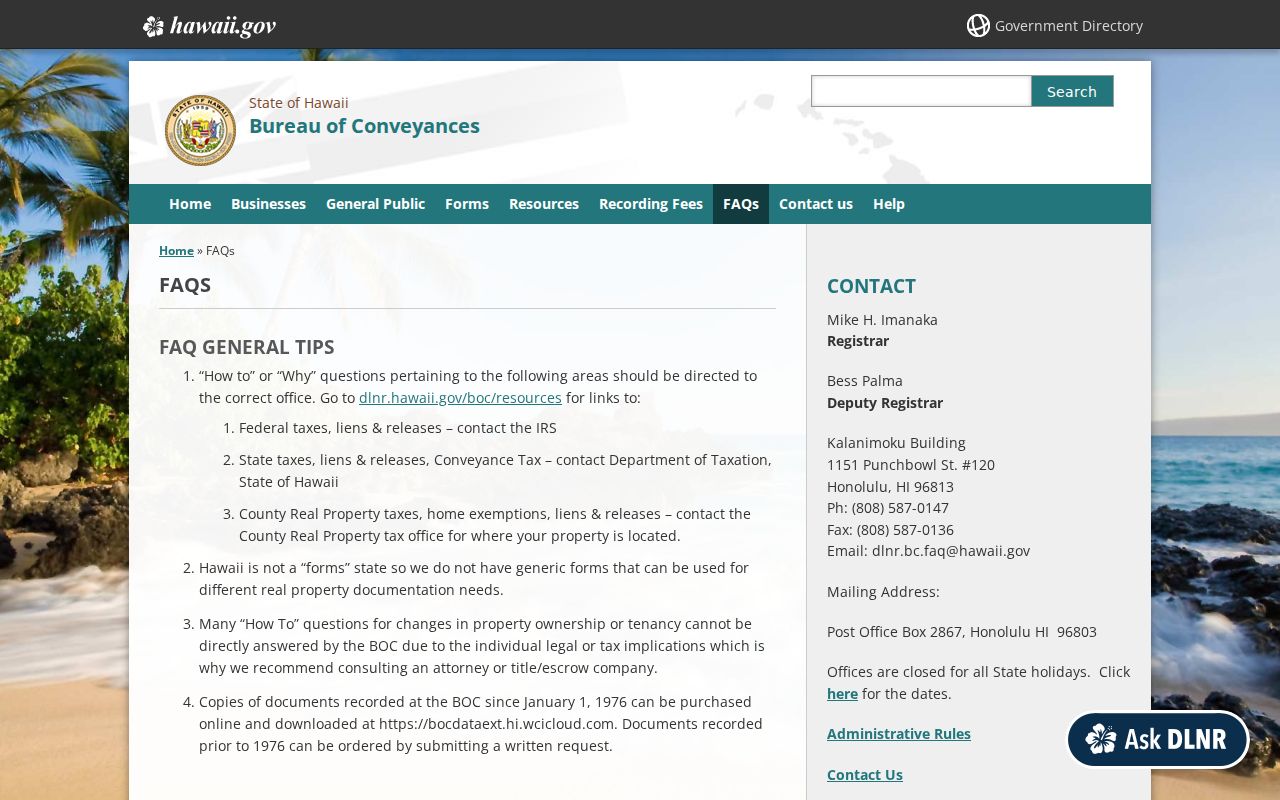
The captured guidance helps decode a chain when an older citation does not resemble a modern document number.
Older Honolulu Resident Deeds
The 1976 online cutoff is not the archive’s beginning. BOC records reach to 1845. For an older previous residents trail, use the Public Reference Room in Room 123 of the Kalanimoku Building or the written request route. A FamilySearch collection also indexes Hawaii deed records from 1846 through 1900, but its access conditions may require an account or an affiliated-library setting. The official custodian remains BOC.
The BOC general-public access page sets out the historic search and request choices.
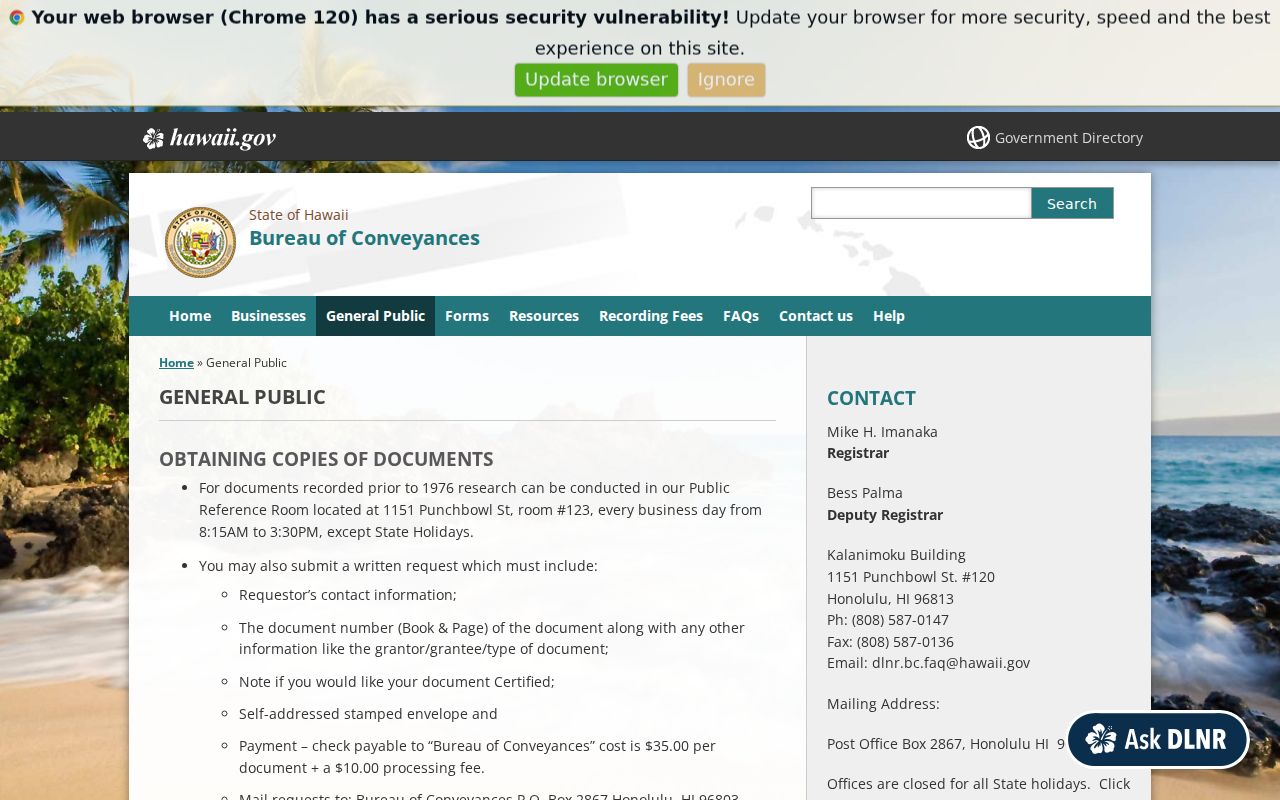
This route prevents a false break in the ownership timeline merely because the online index stops.
Honolulu Resident Directories Between Deeds
Deeds identify recorded interests, not every occupant. Printed directories and census schedules supply the household layer. The 1908 directory street index is especially useful because an address can lead to an alphabetical name entry. Earlier years may require a name-first search. Husted and Polk-Husted editions, later Polk city and county volumes, telephone books, and island directories vary by year and have known gaps.
Pair a directory year with the closest available census or local schedule, but never copy one household forward without proof. Use this flow:
- Find the address or likely person in a directory and record the exact year, printed spelling, abbreviation, and page.
- Check the closest census or HSA local schedule for street, household members, occupation, and property fields.
- Compare the address with the deed chain and a map, then note any mismatch instead of merging people.
- Repeat with the next directory year to find an arrival, departure, surname change, or gap.
Honolulu names may appear with or without ʻokina and kahakō, initials, aliases, changed name order, or alternate English and Hawaiian spellings. Try those forms without inferring identity from a surname alone. The Honolulu city directory collections explain the publishers and shelves in depth.
Sanborn Maps Date Honolulu Buildings
Sanborn fire-insurance maps show a building footprint, material, use, street position, and nearby structures. They do not name a resident. Use them to test whether the house existed in a given map year and whether its shape changed before a permit or directory entry. The University of Hawaiʻi collection includes selected Honolulu maps from 1914 through 1950, while Historic Hawaiʻi Foundation’s Oʻahu house-history guide links maps with deeds, directories, permits, and address research.
Browse the UH Mānoa Sanborn map collection by the sheet and place that match the parcel.
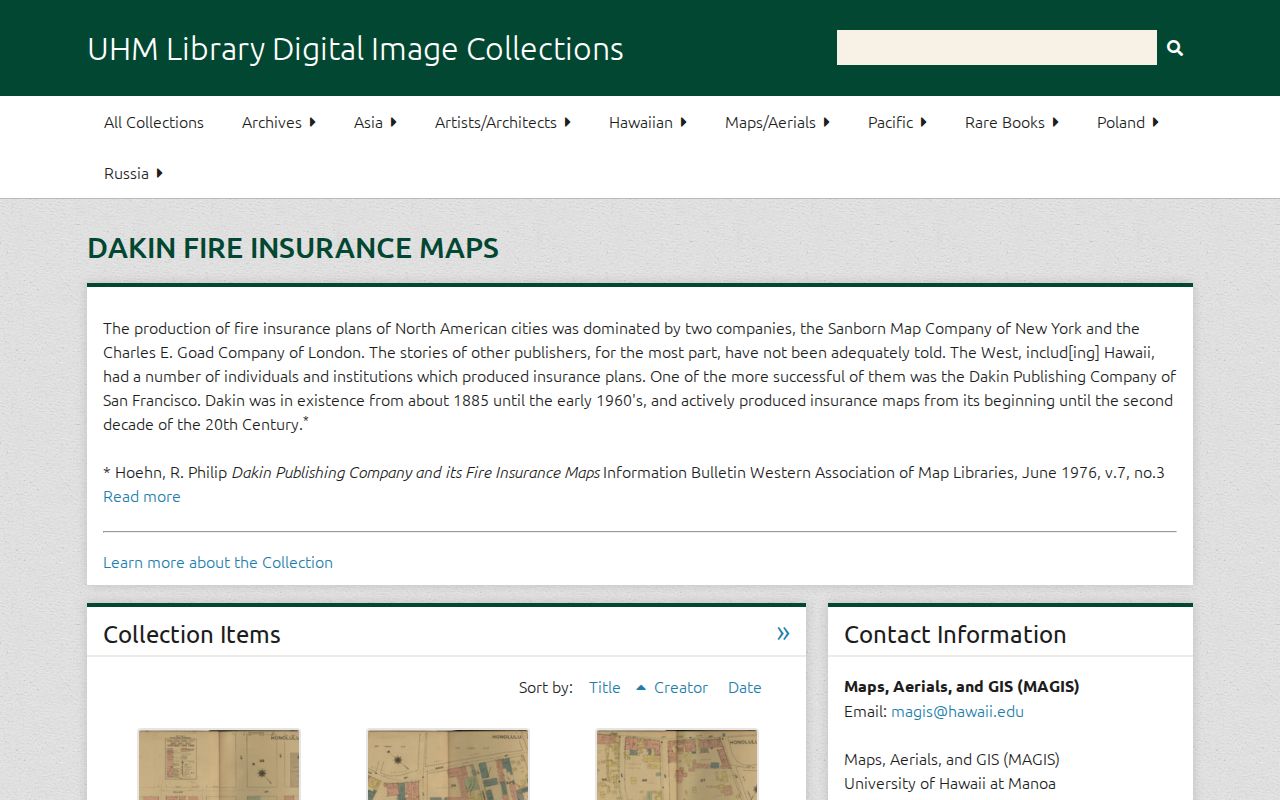
The map becomes useful only after its street and lot position have been tied back to the modern TMK or a recorded plat.
Honolulu Permits Build a Timeline
DPP permits can date additions, alterations, demolition, solar work, plumbing, electrical work, room changes, and other physical events. Search modern records by permit or application number and TMK. Fields may include issue, completion, status, contractor, plan maker, proposed use, floor area, stories, construction type, and value. A project party is not proof of residence, but the date may explain why the address or building description changed.
Pre-January 1972 permits are not online. Take the TMK to the Development and Advisory Services Branch at the Fasi Municipal Building or use its request-to-view-records route. This offline bridge is essential for many older Honolulu houses and is stronger than assuming that no permit existed.
Note: Preserve the permit number, TMK, status, and source date because an application and a completed project are not the same event.
Bridge Changed Honolulu Addresses
No official complete citywide renumbering crosswalk or verified one-time renumbering year was located. A modern number may therefore fail in an old directory even when the household is present. Compare the 1908 street index, State Archives roads files, Sanborn sheets, plats, deeds, and HoLIS. Search old and current street spellings. If the lot was split, merged, or converted to condominium units, follow the legal description rather than forcing the old number onto the new parcel.
A short evidence note is better than an invented match: “The directory used an older street number; the plat and map align the lot.” Keep an image or page citation for each bridge. That record allows another researcher to retrace the decision.
Finish Honolulu Resident Timelines
When a name disappears from the address, search a dated obituary, cemetery index, probate packet, or newspaper notice. Hawaii State Archives holds historical probate, wills, cemetery, census, court, and vital indexes. FamilySearch’s Hawaii probate packets cover 1814 through 1917. HSL, UH, and the Hawaiian Historical Society extend the trail through newspapers, manuscripts, yearbooks, and local collections. Recent vital certificates are not open for general inspection under HRS section 338-18, while genealogy access applies to qualifying events more than 115 years old.
Use an obituary or probate file to confirm relatives, death, an estate representative, or a later place, not to guess at a protected current address. A former owner may never have occupied the house, and an occupant may never have held title. Mark the role beside each name: owner, grantee, directory subscriber, census household member, permit party, heir, or neighbor.
Lawful use. Honolulu previous residents records support house history, genealogy, and heir research. Never use the trail to harass, track, threaten, or expose a living person.