
Honolulu Neighbors by Public Source
A block lookup works best when each official source answers one narrow question. HoLIS maps the parcel shapes around a known address. RPAD adds the fee owner, site address, mailing or care address, class, exemptions, and assessed values. DPP permits show work linked to a TMK. Neighborhood Board records describe civic activity. None is a complete roster of Honolulu neighbors or household members.
| Source | What It Shows About a Block | Access |
|---|---|---|
| HoLIS parcel viewer | Tax and regulatory parcel shapes, address IDs, linked reports | Free web map; not a survey |
| Honolulu RPAD | Fee owner or lessee fields, site and mailing data, tax class | qPublic and RPAD offices |
| DPP permit records | Projects, permit numbers, TMKs, work dates and status | HNL Build/open data; older files by request |
| Election records | Names, districts, precincts, and status within legal limits | Purpose-limited office request |
| Neighborhood Boards | Public boundaries, agendas, minutes, profiles, and civic contacts | Neighborhood Commission Office |
An owner name is not the same as an occupant. A mailing address may belong to an agent, relative, business, trust, or post-office box. A home exemption can support an owner-occupancy lead, but it is not conclusive proof of who is present now. Record the role shown by each source instead of relabeling every named party as a neighbor.
Honolulu Blocks Have Two Parcels
HoLIS can expose a current tax parcel, a current regulatory parcel, and a city address ID at the same map point. Tax parcels support assessment. Regulatory parcels come from DPP subdivision or consolidation work. They are not always one-to-one, especially for condominiums, vertical units, and land that has changed configuration.
The successful capture below comes from the official HoLIS parcel-layer metadata.
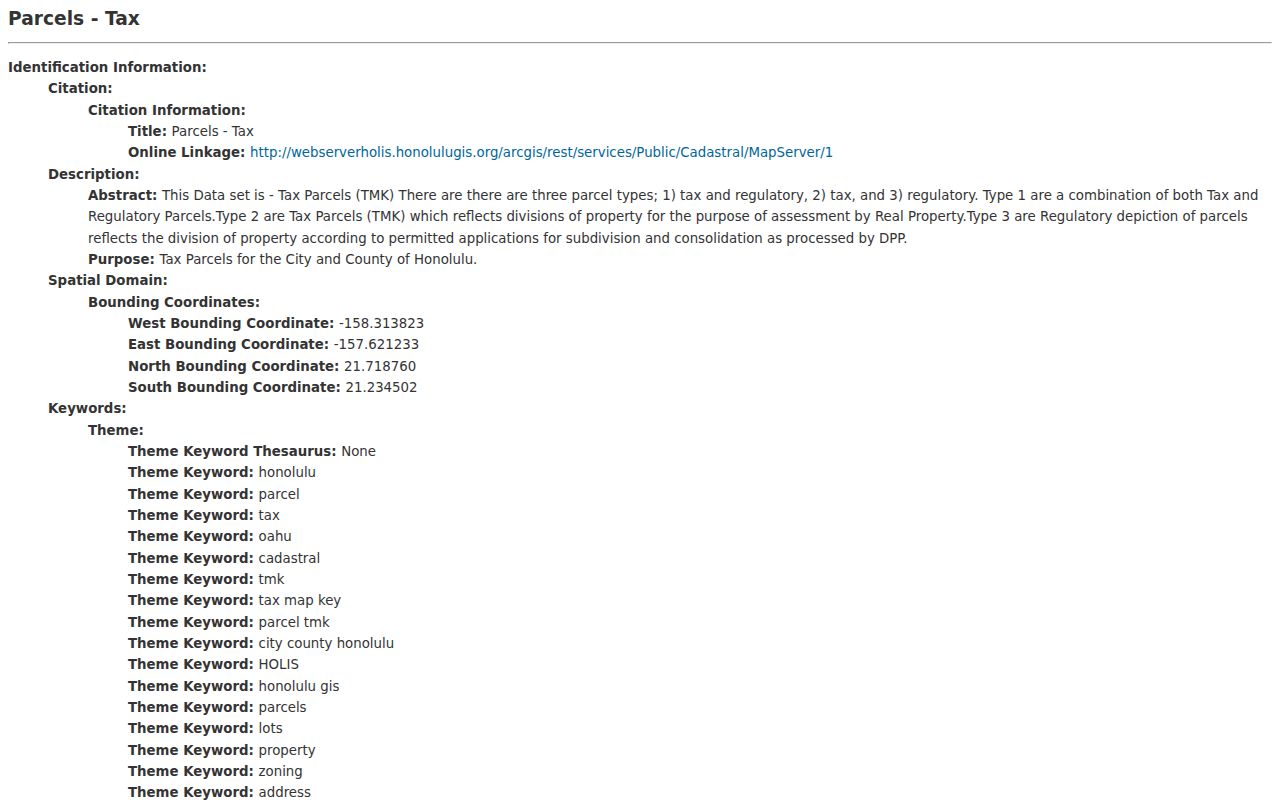
Save all three identifiers when the map provides them. That small step prevents a condo unit, parent lot, or regulatory polygon from being mistaken for the parcel on the assessment card.
Map Honolulu Neighbors by Parcel
Start with one verified situs address, meaning the physical site address. Search the Honolulu parcel selector or HoLIS map, select the target polygon, and retain its TMK. Then click only the parcels that touch it or face it across the road. This keeps the scope to the immediate block rather than rebuilding a full street directory.
- Locate the known address and check the map's address label against the source document.
- Record the target tax parcel, regulatory parcel, address ID, and TMK without merging them.
- Click each adjacent polygon and save only its parcel identifiers and linked public reports.
- Open RPAD for each TMK. Separate the site address from the tax-mailing or care address.
- Use DPP, BOC, or a board record only when the block question calls for that source.
For every parcel along a long named road, switch to the Honolulu street directory. A neighbors search should stay centered on the few parcels that form the near block.
Read Honolulu Neighbor Parcel Cards
RPAD's parcel card may show fee owner identifiers, lessee or assignee data, property class, exemption information, land and building values, tax information, site address, and a separate mailing or care address. The page is an assessment record. Recorded instruments held by the statewide Bureau of Conveyances control title questions.
The Honolulu qPublic search entry supplies the official assessment route. The captured disclaimer helps set the right expectation.
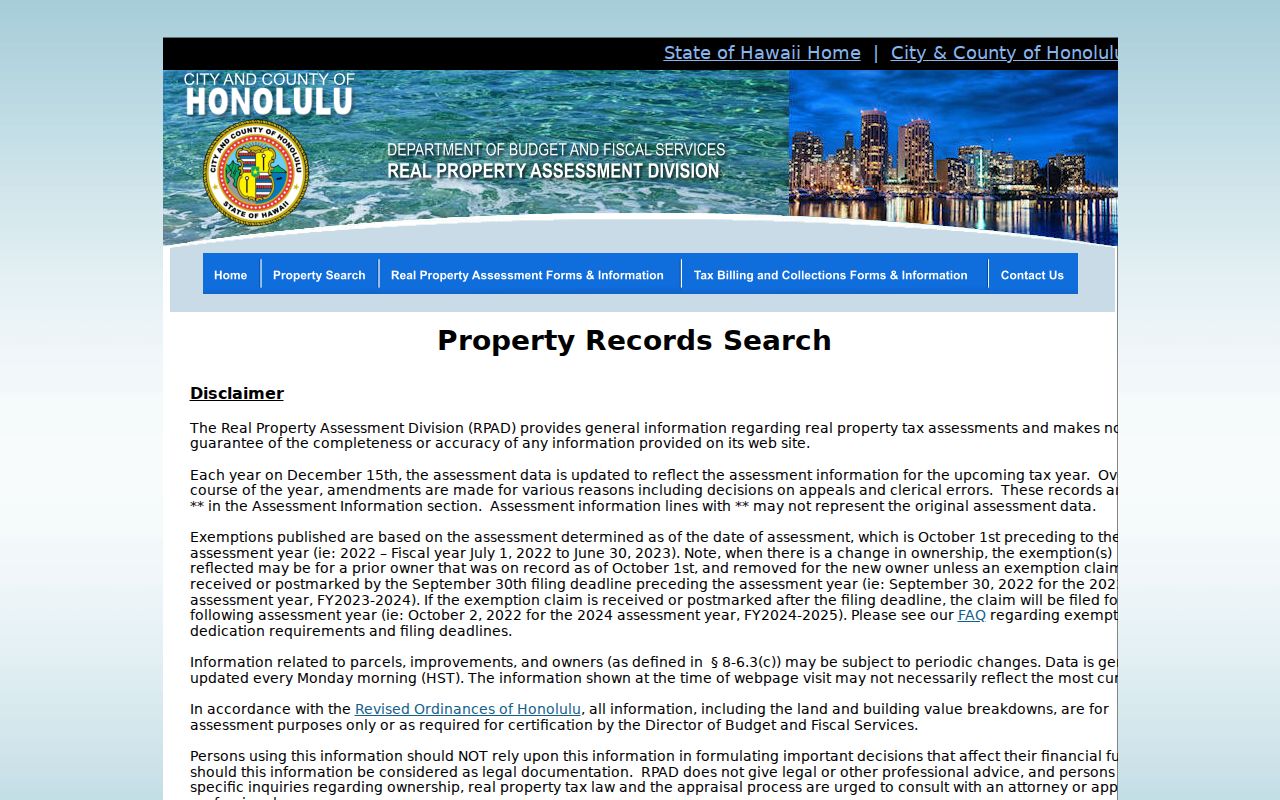
Compare the update date and tax year across cards. A different mailing address may help identify an owner's administrative connection, yet it should never be reported as the owner's current home without another lawful source.
Note: A fee owner, trustee, lender, executor, permit applicant, or contractor is a record role, not automatic proof that the person is your neighbor.
Projects Around Honolulu Neighbors
DPP permit data can explain visible work on the block without guessing who lives there. Modern records can show a permit number and type, TMK, project address, work description, contractor or plan maker, valuation, filing or issue dates, completion data, and status. The permit belongs to a project record, not a household profile.
Permits before January 1972 are not online in HNL Build. For those files, retain the TMK and use the DPP Data Access and Imaging Branch request route. This offline channel matters in older Honolulu blocks where a structure predates the web record by decades.
Honolulu Community Directory Layer
The Neighborhood Commission Office supports Honolulu's public board system across Oʻahu. Its board pages can provide boundaries, meeting dates, agendas, minutes, resolutions, and public profiles. Those records show how a block participates in civic life. They do not supply a private association or congregation membership roster.
Neighborhood Commission Office
Board list and district resources
Use for official board boundaries, meetings, and records.
Honolulu County Elections
530 S. King Street, Room 100
808-768-3800
elections@honolulu.gov
RPAD
Real Property Assessment Division
Use for parcel assessment records and office help.
Public minutes may name speakers, officers, and agencies tied to an issue. That proves participation in a meeting or document, not residence. Private HOA, association, block-watch, and congregation rosters were not located as open government records and should not be implied.
Use the board boundary after the parcel has been identified. A board district can span several postal codes and many tax plats, while one ZIP may cross more than one civic area. Agendas can reveal a traffic project, park issue, zoning proposal, or city presentation near the block. Minutes can show what was discussed and which public officials responded. They should be read with the meeting date because board activity changes over time. If an agenda names a resident who spoke, describe that person only as a meeting participant unless another official source establishes a separate role.
Honolulu Voters on a Block
Hawaii law makes a narrow set of voter fields public under election and government-purpose rules: full name, district or precinct, and status, with residence information governed by the statutory channel. Social Security numbers, state ID data, full birth dates, signatures, and other personal fields are withheld. Hawaii does not register voters by party.
The Online Voter Registration tool confirms or updates the voter's own status. It is not an open name-and-address search for Honolulu neighbors. Ask County Elections about the current permissible request path. Protected-voter procedures and the Hawaii Address Confidentiality Program can shield a real address, so a substitute or absent address may be a legal protection.
Status also needs care. Active, inactive, or cancelled describes the election record at the time of the file. It does not prove that a person moved, died, or remains at the address. List maintenance, a returned notice, a duplicate entry, or a voter request can affect the label. Keep the precinct and district as election geography, and never infer a ballot choice. Hawaii's public voter fields do not include party affiliation because the state does not register voters by party.
Official Honolulu Block Records
Commercial neighbor tools may merge old addresses, marketing data, and unclear estimates. Official sources are less broad, but they state the custodian, field meaning, and update limits. That makes them easier to verify.
| Source type | Strength | Limit |
|---|---|---|
| HoLIS and RPAD | Current parcel geometry and assessment roles | Not a household roster or title opinion |
| DPP and board records | Documented projects and civic activity | A named party may not live on the block |
| Commercial compilation | May combine many old leads | Source, date, and role can be unclear |
Use public records for lawful personal research, civic curiosity, or verifying an official notice. Confirm any important result with the relevant Honolulu or Hawaii custodian.
Honolulu Block Safety Records
A nearby incident does not justify labeling a person or parcel. Honolulu Police Department reports are requested through the Records and Identification Division, and reports may be redacted under law. Request the specific public record instead of relying on rumor or an unsolicited message.
The official HPD police-report request page describes request channels, contact information, redactions, and copy procedures.
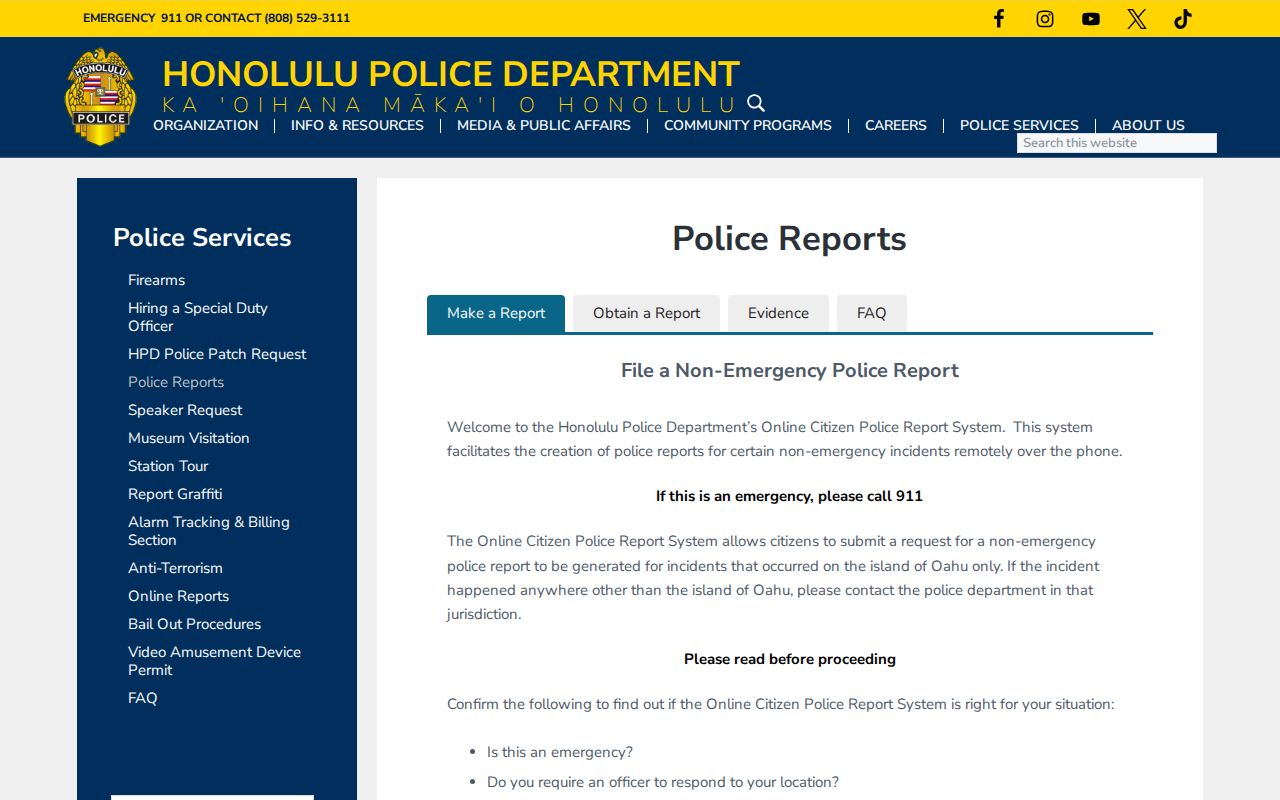
Recent DPP warnings about fake violation notices reinforce the same rule. Verify a notice through official city contact details before associating it with a property or nearby person.
Privacy for Honolulu Neighbors
Public systems do not reveal every occupant, visitor, family member, utility customer, driver record, delivery account, private member, or ballot choice. Family and juvenile cases may be sealed. Law-enforcement reports can be redacted. Address Confidentiality Program participants receive substitute-address and mail protections, and some voter residences may be withheld for safety.
Lawful use. Honolulu neighbor records may support civic curiosity and personal safety. Never use them to watch, threaten, harass, or harm anyone.
A blank result is not a defect that should be defeated. It may reflect restricted data, a substitute address, a lag between systems, or the simple fact that the person is not named in that public record. Contact the custodian for a lawful correction or clearly defined record request under Hawaii's Uniform Information Practices Act.