
Finding Residents Across Honolulu
Honolulu has no single public list of everyone who lives at each address. Its most useful resident rolls name people in a defined role: an assessed owner, a party to a recorded deed, a court party, a registered voter under limited access rules, a business officer, or a subscriber in an old directory. Start with the record that fits the fact in hand. An address points first to RPAD and HoLIS. A full name may fit a court, deed, license, business, or unclaimed-property index. An older street and year belong in the library and archives.
A Honolulu residents directory search becomes reliable only when two records agree. Keep the date of each result, because a tax card, deed, and directory volume describe different moments. Also confirm the person's role. A trustee, lender, lawyer, or company officer may be named without living at the place shown.
- Search the City and County property roll by the exact address, owner name, or TMK. Save the site address apart from the mailing address.
- Open HoLIS to verify the tax parcel, regulatory parcel, address ID, and nearby geography.
- Search the Bureau of Conveyances by the owner's name, date, instrument, and land identifiers. Check both Regular and Land Court records when relevant.
- Use court, vital, voter, business, or license records only for the fact each official source can confirm.
- For older residents, check city directories, census schedules, newspapers, probate files, cemetery indexes, and maps. Request the authoritative copy from its custodian.
Honolulu Directory Record Keepers
Honolulu records are split between city, county, and state keepers. RPAD maintains assessment data for all Oʻahu. Hawaii's Bureau of Conveyances records land instruments statewide, so there is no separate Honolulu deed recorder. Honolulu County Elections handles the local register within state election law. The full address method belongs in the Honolulu street directory; this office list shows where to verify the resulting clues.
DLNR Bureau of Conveyances
1151 Punchbowl Street, Room 123
Honolulu, HI 96813
808-587-0147
Honolulu County Elections
530 S. King Street, Room 100
Honolulu, HI 96813
808-768-3800
Honolulu RPAD Starts the Trail
The Honolulu Real Property Assessment Division links to qPublic searches by owner, address, account, or TMK. A TMK is the tax map key used to identify a parcel. The result can show site address, land area, fee owner, lessee or assignee, property class, exemptions, assessment values, and a separate mailing or care address. It is an assessment record, not legal title or proof that a named person occupies the home.
The city notes that assessment data generally updates on Monday, while annual tax-year information is tied to the December 15 assessment cycle. Date the result. A mailing address may belong to an agent, caregiver, or post office box. A home exemption is a clue, but it still does not prove current occupancy.
The official Honolulu property screen illustrates the opening point for a resident search.
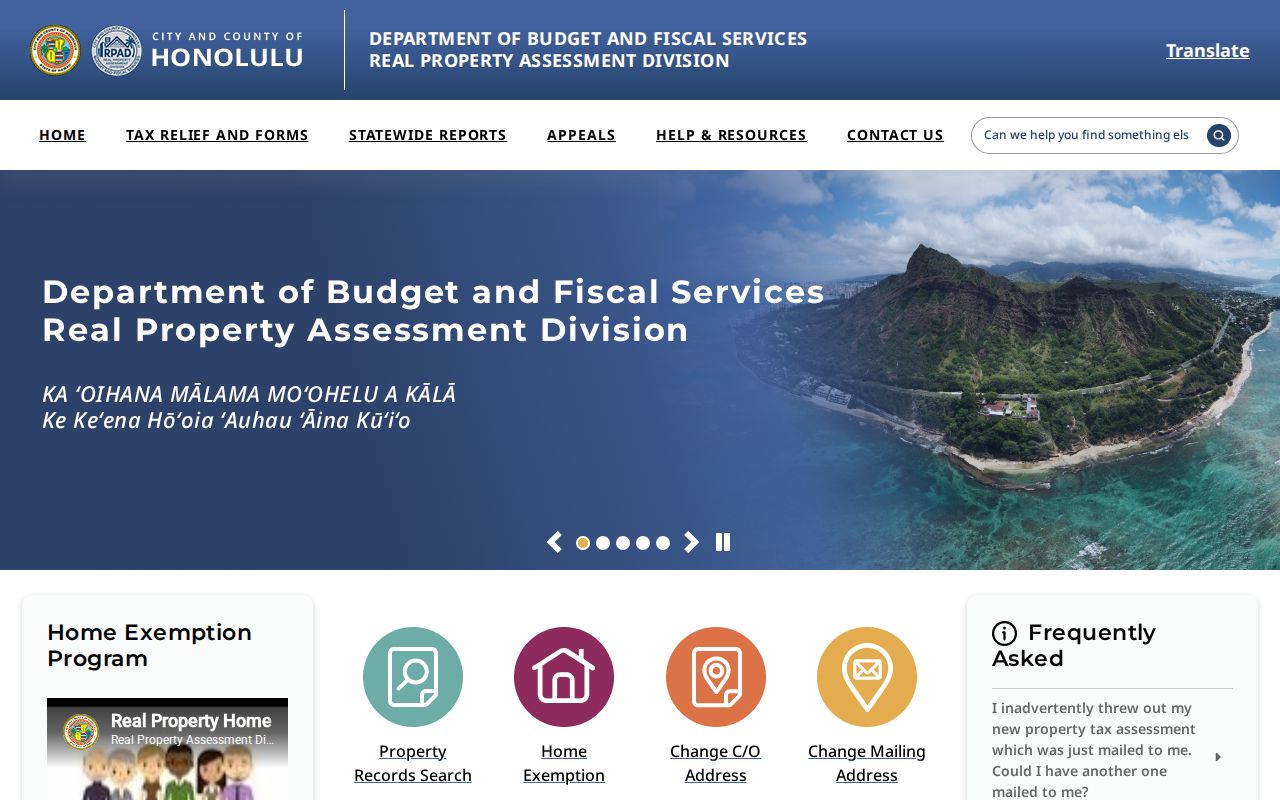
Carry the parcel ID from RPAD into HoLIS and the recorded-land system instead of treating the assessment card as a final answer.
| RPAD field | Use in a directory search | Important limit |
|---|---|---|
| Owner name | Creates a deed-index lead | May be a trust or entity |
| Site address | Locates the physical parcel | May differ from postal wording |
| TMK | Links parcel, GIS, permit, and deed work | Not itself a person identifier |
| Mailing or care address | Shows where tax notices go | Does not prove residence |
| Class and exemption | Adds assessment context | Not conclusive occupancy proof |
Honolulu Deeds Use State Records
Hawaii's land trail differs from the county-recorder model used in most states. The Bureau of Conveyances public route serves the whole state and preserves an archive reaching to 1845. Its online index generally covers 1976 forward. Search is free, but viewing or buying document images requires the applicable account and payment route. Older work moves to the Public Reference Room or a written request.
Search both grantor and grantee forms of a name. A grantor transfers an interest; a grantee receives one. Add a date range, document number, book and page, instrument type, TMK, or legal description to separate common names. Honolulu parcels may have Regular or Land Court history, and condominium records may require both systems. The index is only a lead. Read the instrument and legal description before drawing a title conclusion.
- Index
- A list that points to a record, not the full recorded image.
- Parcel
- A mapped unit of land identified for tax and land-record purposes.
- Roll
- An official list created for one public function, such as assessment or elections.
- Criss-cross directory
- A directory arranged by street address instead of only by surname.
Current Honolulu Directory Sources
Present-day Honolulu directory sources cover roles, not whole households. Pair the broad assessment lead with a record that matches the reason for searching. The table separates official access from what each roll can actually establish.
| Source | Who It Lists | Keeper | Access |
|---|---|---|---|
| RPAD assessment roll | Fee owners and lessee leads | City and County RPAD | Free web search and office help |
| Voter register | Names, district or precinct, and status under narrow rules | County Elections | Own-status portal or authorized request |
| BOC document index | Grantors, grantees, and parties to instruments | State BOC | Free index, paid images, counter and mail fallback |
| eCourt Kōkua | Public case parties | Hawaii Judiciary | Free index; some documents paid or terminal-only |
| DCCA business and license files | Business officers, agents, and licensees | State DCCA | Public search; role is not residence |
The Honolulu resident lookup workflow shows how to verify one name across these roles. Public neighborhood-board pages add civic contacts, agendas, and minutes, but they do not publish private membership lists.
Honolulu Court Names Need Context
eCourt Kōkua searches public Hawaii Judiciary case indexes by party, person, company, case, and other controls described in the court manual. Results can include case ID, title, court, location, filing date, case type, status, party role, and a PDF icon where a document is available. A name match does not show that the person lives at an address. It may identify a lawyer, company, representative, or unrelated same-name party.
Coverage depends on court and case type. Sealed matters, juvenile records, confidential family material, and some older cases will not appear. The courthouse terminal is free and may be a better fallback than online paid documents. If the index is blank, ask the filing court about coverage and confidentiality before deciding that no case exists.
Hawaii Voter Access Is Narrow
The Online Voter Registration system lets a voter register, update a record, or confirm personal status with identity credentials. It is not an open search for another Honolulu resident. Hawaii law makes full name, district or precinct, and voter status public within the authorized election and government framework. Residence data is governed by HRS §§11-14 and 11-97, while Social Security numbers, driver-license or state-ID data, full birth dates, signatures, and other protected fields stay confidential.
Hawaii does not register voters by party. A missing or substitute address may reflect the Address Confidentiality Program or another protected-voter rule, not an error. For the current permissible route, contact Honolulu County Elections instead of attempting to work around that protection.
The official registration screen shows the self-service nature of this resident roll.
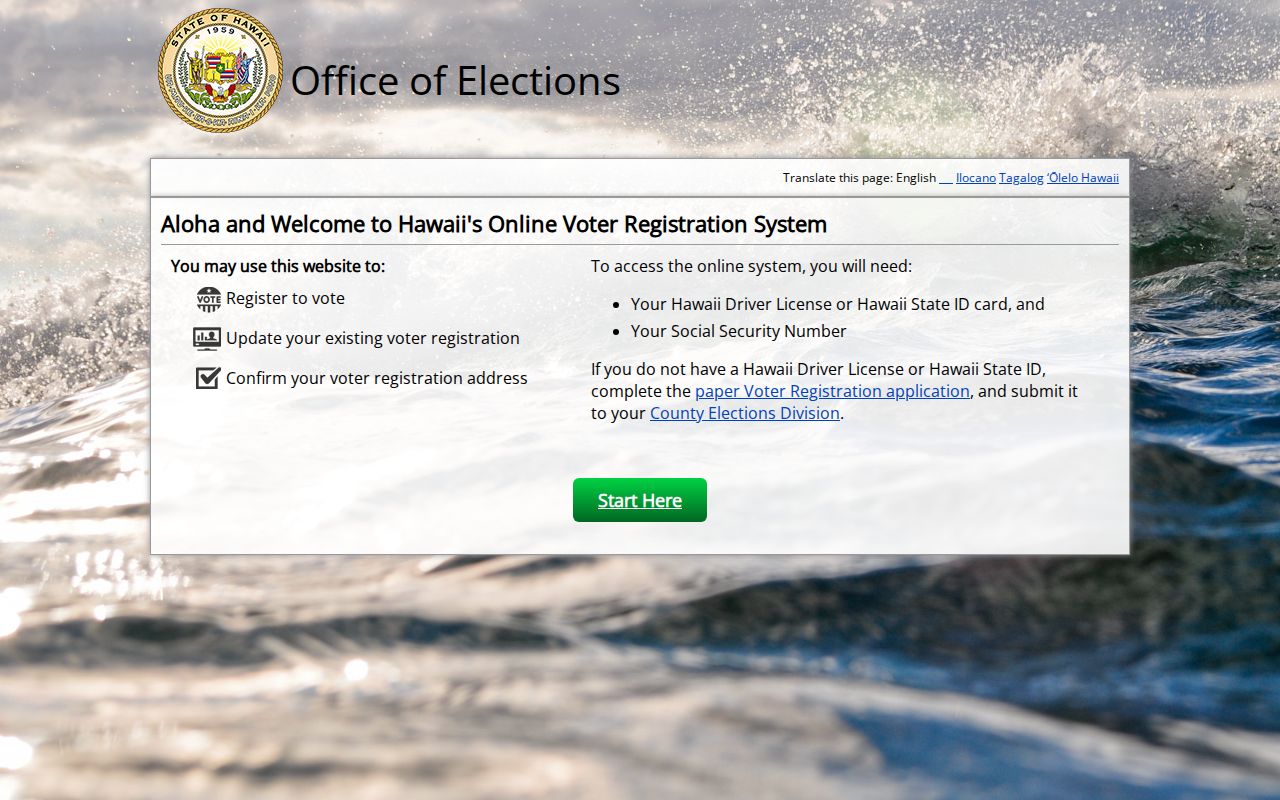
Its identity checks and private fields should never be confused with a public people-search form.
Honolulu Vital Records Stay Restricted
Hawaii birth, death, marriage, and civil-union certificates are held by the Department of Health. HRS §338-18 does not open recent certificates for general inspection. A certified copy requires a direct and tangible interest, proof of identity, and the proper request channel. Genealogy access applies to events more than 115 years before the current year. Historical indexes at the Hawaii State Archives and Hawaii State Library can supply a lead without opening a protected certificate.
Divorce custody changed on February 1, 2026. The Department of Health no longer maintains divorce records, so a request now goes to the court where the divorce was granted. On Oʻahu, that normally means the First Circuit route. This timing change is a good reason to check the current custodian page before mailing a form.
The DOH genealogy instructions state the age threshold and ordering route.
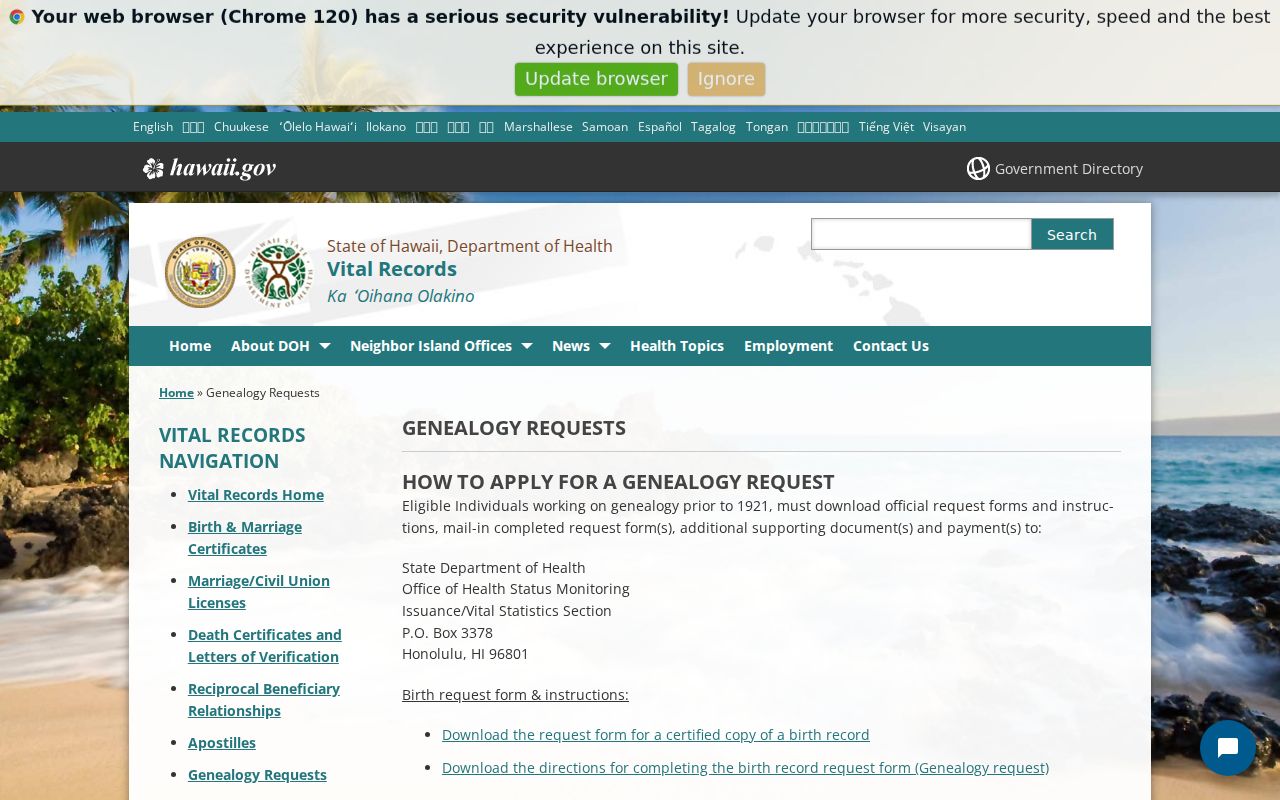
Use the index to identify an event, then prove eligibility before asking for the certified record.
Honolulu Business Names Are Leads
Hawaii Business Express and the Professional and Vocational Licensing search can connect a person with a public business role. Business filings may show an entity name, prior names, status, officers or managers, registered agents, filing addresses, and available documents. A filing address can be an office, agent, or mail address. It does not by itself establish a home.
DCCA moved Business Registration services to Hawaii Business Express on July 6, 2026. The transition notice said that some services and expedited handling were still limited, so save the date and current portal URL. The professional-license search can confirm a name, license number, type, status, and board details. Again, it confirms a regulated role, not residency.
The official business portal provides a current Honolulu directory lead for public company affiliations.
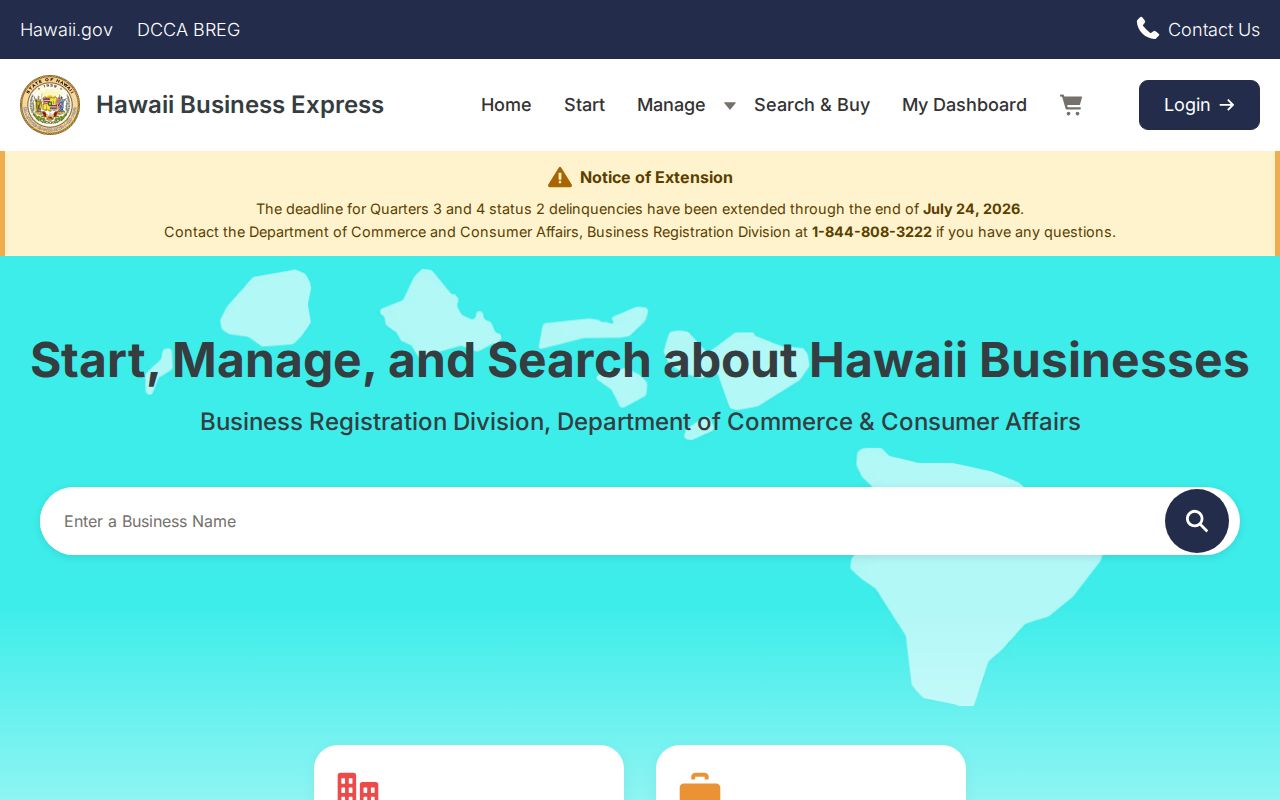
Verify the entity record and document date before connecting the person to any other public record.
The public license search provides a separate status check.
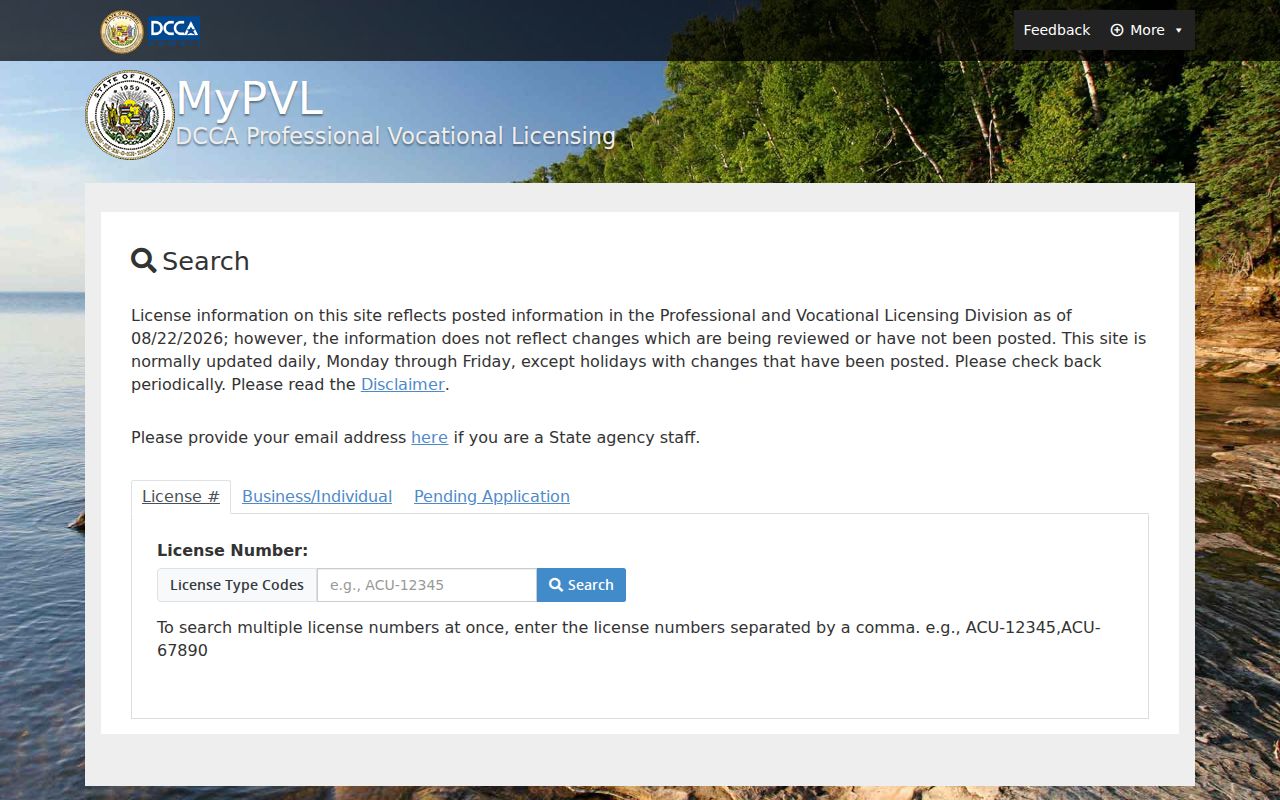
Using both sources helps distinguish a company role from an individual professional credential.
Request Missing Honolulu Records
When an online portal does not expose a defined public record, Hawaii's Uniform Information Practices Act offers a request process. Identify the agency, describe the record by subject, date, place, and known identifier, and ask for the existing record rather than an explanation or a new report. HRS chapter 92F, especially §§92F-11 and 92F-13, controls access and exemptions. A custodian may redact protected fields and release the rest.
The Office of Information Practices request guidance explains request contents, response steps, possible fees, and review options. Ask for an estimate when copying or search costs may apply. UIPA does not override a law that makes a vital record, sealed case, adoption matter, or protected address confidential.
The state guidance offers the fallback when a Honolulu residents directory portal does not contain the needed record.
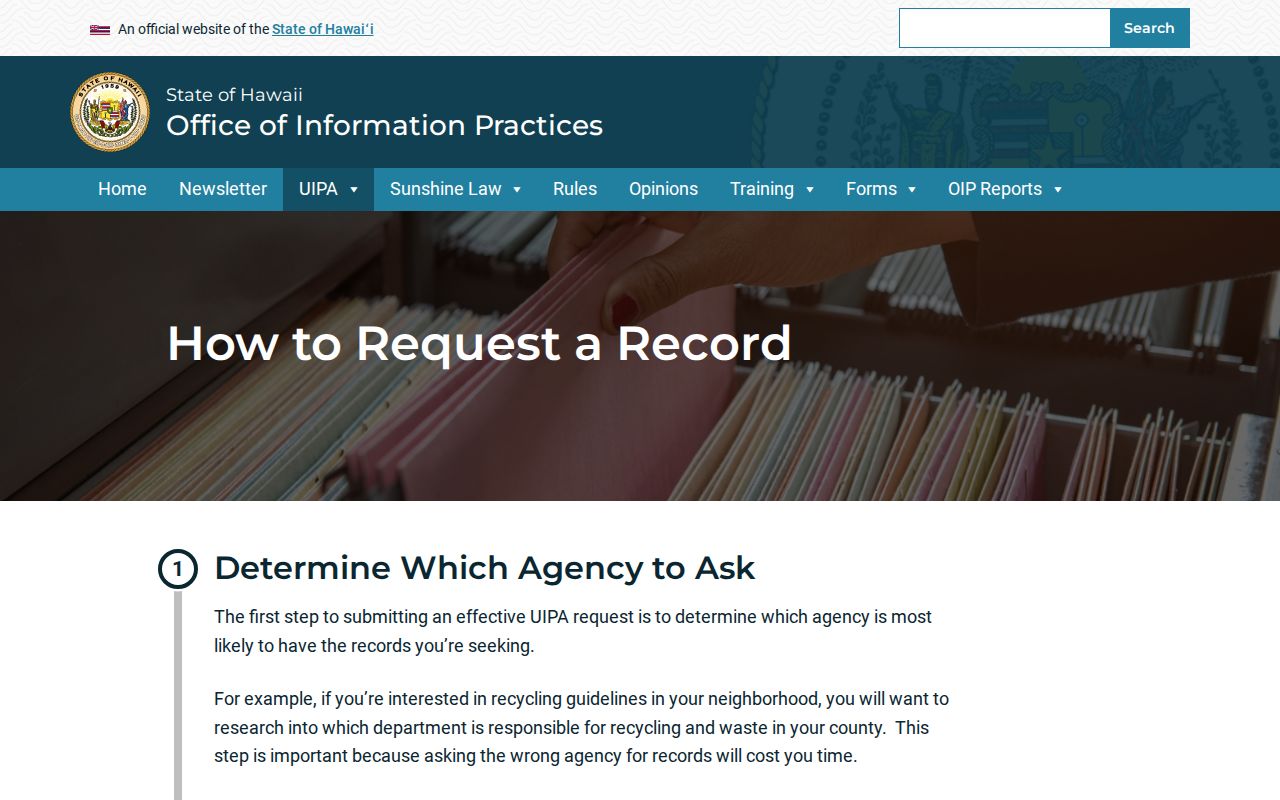
A narrow request with a TMK, case number, permit number, or date range is easier for the agency to locate and review.
Historical Honolulu Resident Directories
Honolulu's historical directory layer spans Kingdom, territorial, and statehood years. The Hawaii State Archives, Hawaii State Library, UH Mānoa, EVols, Hawaiian Historical Society, and FamilySearch hold different parts of the trail. City directory runs include Husted and Polk editions, a digitized 1903–1904 volume, and a useful 1908 street index. Hawaii State Library telephone-book holdings run from 1894 through 2001, but they list subscribers rather than every person in a home.
A directory entry may give a name, occupation, spouse or household notation, address, business affiliation, and abbreviation marks. Pair one annual entry with the next volume, a census schedule, newspaper notice, deed, probate file, cemetery index, or Sanborn map. Preserve the printed spelling, including ʻokina and name-order variants. The complete shelf and reading method are covered in the Honolulu city directories collection.
Honolulu Searches Have Legal Limits
A lawful Honolulu residents directory search respects the purpose and limits of each source. Do not use public records to stalk, harass, threaten, or expose a protected person. Hawaii's Address Confidentiality Program under HRS chapter 801G supplies substitute addresses and mail safeguards for qualified survivors. Protected voter procedures, sealed family matters, juvenile files, and redacted reports create other lawful gaps.
Commercial people-finding products combine public filings, marketing data, old addresses, and automated matches. They may be quick, but they can merge two people or retain stale data. Official sources are narrower and sometimes slower, yet they name the custodian, date, record role, correction route, and access rule.
| Source type | Strength | Main weakness |
|---|---|---|
| Official index or roll | Known custodian and defined public purpose | Limited to named roles and coverage years |
| Certified or recorded copy | Best authority for the specific event or instrument | Eligibility, fees, or in-person access may apply |
| Commercial compilation | May gather broad leads | Unknown freshness, matching, and source chain |
Honolulu Records Cross Oʻahu
The city of Honolulu is legally coextensive with Honolulu County, which covers all Oʻahu. RPAD, DPP permits, HoLIS, county elections, and First Circuit records therefore reach far beyond the urban Honolulu postal label. Windward, Leeward, Central Oʻahu, North Shore, and rural communities may use different USPS city names and 967 ZIP codes while remaining inside City and County agencies.
Keep three geographies separate. USPS controls postal last lines and ZIP codes. TMKs and legal descriptions identify parcels. Neighborhood Board districts organize civic representation. A directory search should label which geography produced the match. A Honolulu agency result does not mean the mailing city is Honolulu, and a 968 prefix does not define the county boundary.
Verify Honolulu Record Notices
Official links matter when a record search leads to a fee or notice. In July 2026, the Honolulu Department of Planning and Permitting warned about fake violation notices and emails. DCCA has also warned about misleading business solicitations. Compare any demand with the city or state domain, record its permit, document, or case number, and call the listed custodian before paying.
The same habit improves every Honolulu residents directory result. Record the URL, access date, identifier, and office. Then obtain the official image or certified copy if the fact affects an estate, family history, property question, or fraud concern. A search screen is a lead. The custodian's original record is the source to rely on.